

Keep Me & My Family Safe™
A Safer Home Starts With Understanding the Invisible.
When you are recovering from cancer treatments or infectious disease issues, every detail matters. Learn how toilet plume aerosols can spread through the bathroom and surrounding environment—and what you can do to help protect yourself and your family.
The Hidden Threat
The Hidden Threat of Flushing the Toilet
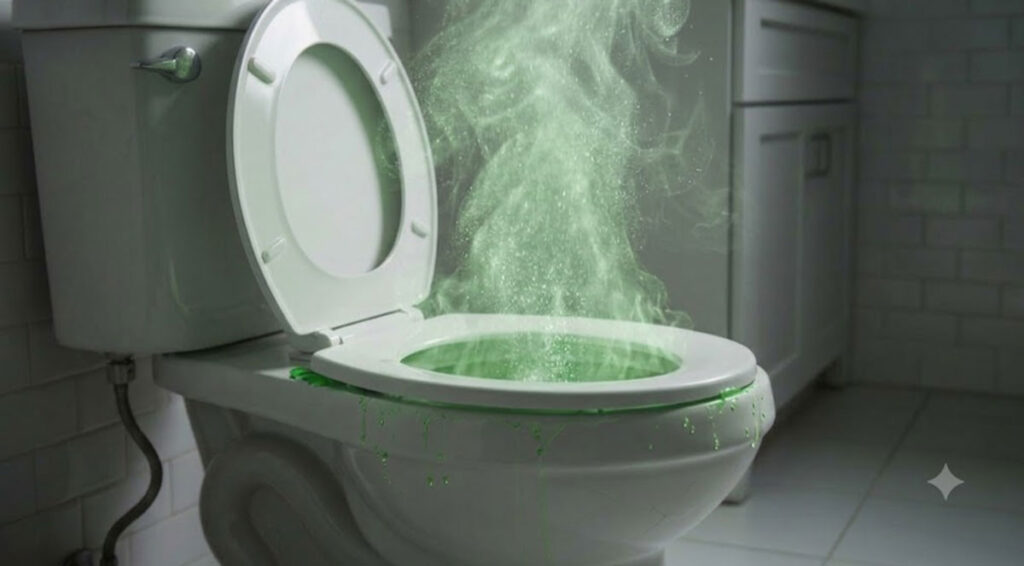
When a toilet is flushed, the dynamic force of the water creates a high-velocity aerosolization event, producing a visible and invisible spray known as a toilet plume. This turbulent cloud forces thousands of microscopic droplet particles high into the air, spreading rapidly throughout the surrounding bathroom space. As these toilet plume particles disperse, they settle on nearby surfaces, handles, counters, and personal care items—acting as active vehicles that transport lingering pathogens and hazardous drug residues across the entire room.
The Invisible Bathroom Hazard: How Toilet Plume Aerosols Threaten Patients and Family/Caregivers

For patients fighting cancer recovering at home, especially those undergoing chemotherapy, managing this “toilet plume” is vital for both the patient and their families/caregivers. There are two key reasons for this:
What the science shows
This Isn’t Just a Theory.

Research
Scientific studies have documented aerosol generation and particle dispersion during toilet flushing.
Visualization
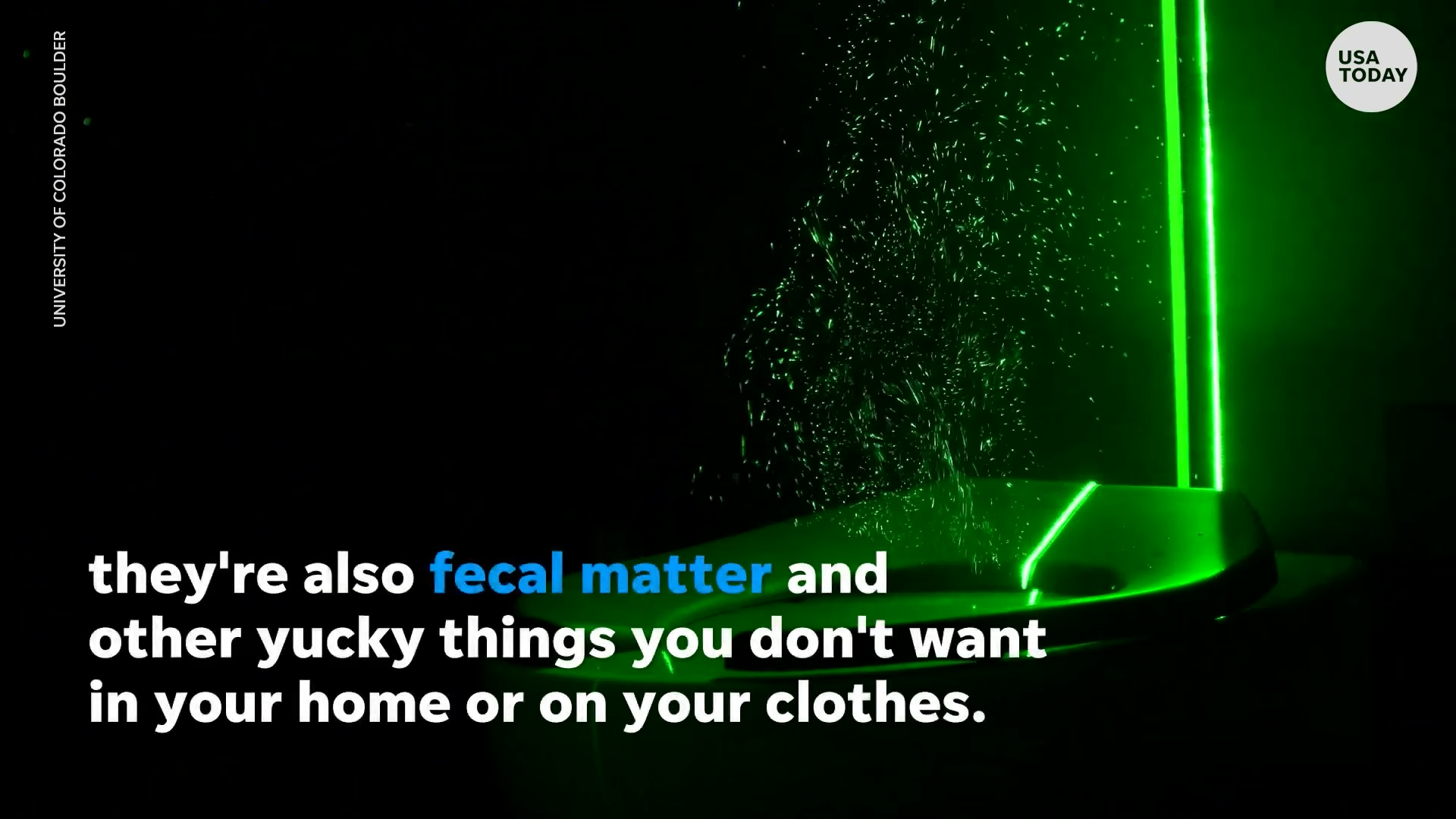
High-speed imaging makes the movement of toilet plume aerosols visible, helping us understand how far they can travel.
Protection
Understanding where toilet plume begins is the first step toward reducing exposure and creating a safer recovery environment.
Why Standard Lids Fail
The Closed Lid Myth
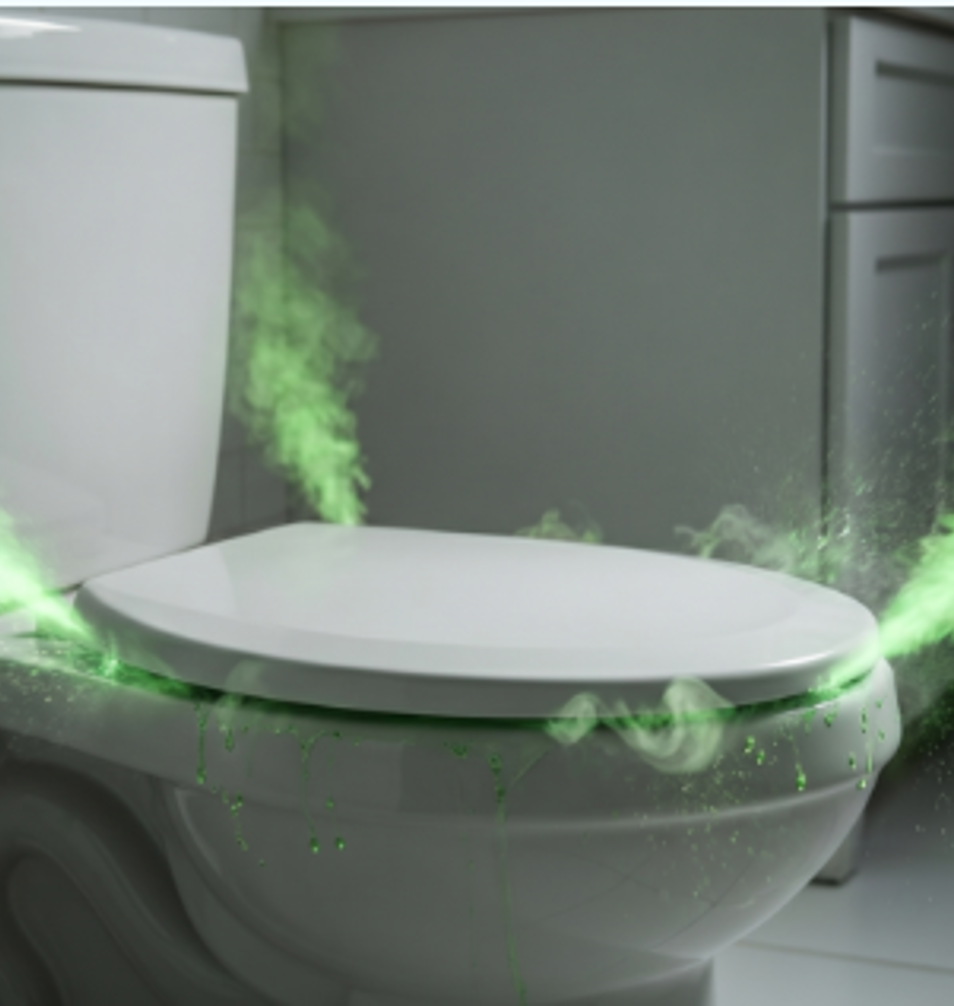
Some people believe that closing the lid before flushing solves the problem. However, studies² show that home toilets are ineffective in blocking toilet plume. Regular lids can’t stop the quick release of tiny particles. Instead, pressure from the flush and air movement push pathogens and chemotherapy through gaps between the lid, and the seat and rim. This spreads invisible particles around the room where they can land on surfaces, towels, and toothbrushes. Research has also shown they can remain suspended in the air, risking inhalation by the patient and family members.
The Solution
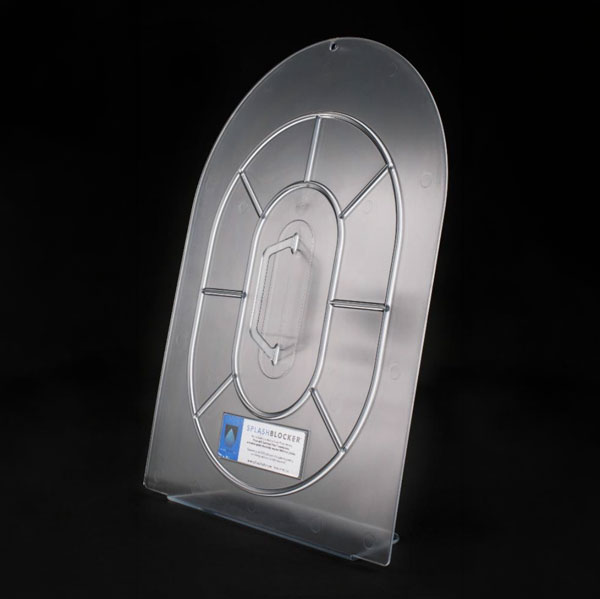
The Splashblocker®: Advanced Aerosol Barrier
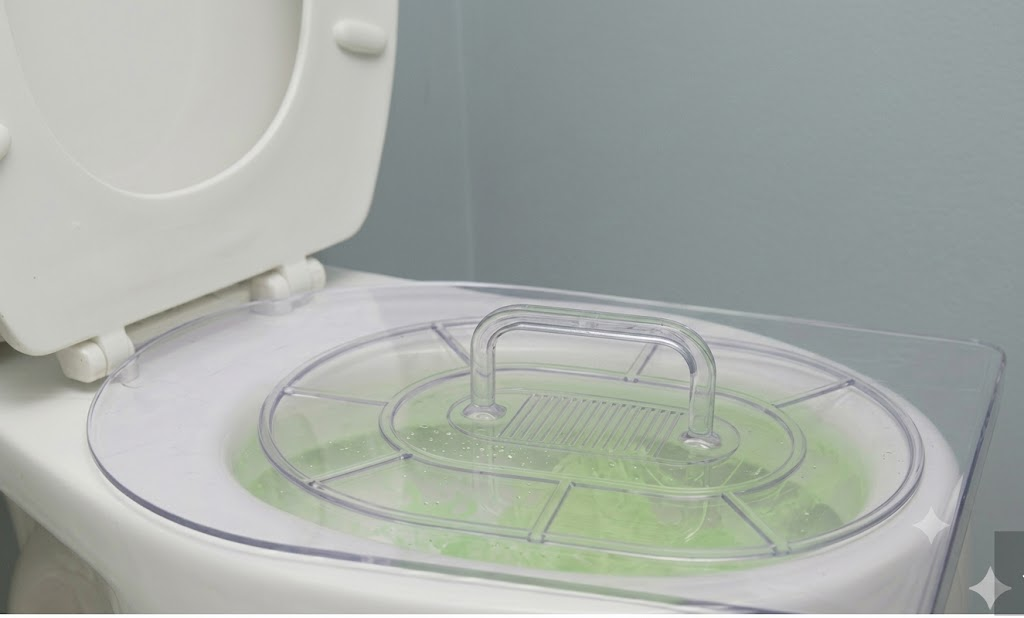
Designed by an oncology nurse, Splashblocker® is a durable bioaerosol containment barrier engineered to block toilet plume aerosols during home recovery—a core component of the Keep Me & My Family Safe™ Program.
As a physical barrier, Splashblocker® blocks the plume right at the source. It cuts down toilet plume particles by 99.98%, according to a study published in a peer-reviewed journal. This provides critical source control, significantly reducing both aerosol dispersion and surface contamination.
See How Easy It Is to Use the Splashblocker®
Managing this hidden risk in your home doesn’t require complex or heavy equipment. Now, families have a simple, portable, and highly effective toilet bioaerosol containment barrier specifically designed for easy daily use throughout the home recovery journey.