

Clinical Evidence Briefing
The Medical Necessity of Toilet Plume Aerosol Containment
Completing the Horizontal Infection Prevention Bundle to Target Endogenous Patient Transmission
An evidence-based analysis of uncontained toilet plume aerosols as a modifiable driver of opportunistic infections, mucosal translocation, and environmental contamination in high-risk oncology and BMT settings.
For Infection Preventionists, ID Specialists, and Oncologists: You have optimized air filtration, central lines, and hand hygiene – yet every flush in a patient bathroom continuously re-seeds the immediate environment with aerosolized plume particles and cytotoxic excreta. Review the clinical evidence, epidemiological data, and medical necessity framework below.
Aerosol Fluid Dynamics
The Physics of Plume Dispersion & The Traditional “Lid Illusion”
To understand why standard hospital infection control leaves an unaddressed vulnerability, we must evaluate fluid velocities, droplet nuclei suspension, and the geometric failure of hinged covers.
The Physics of the Toilet Plume
High-Velocity Chaotic Ejection
Flushing generates turbulent upward jets exceeding 2 m/s, transporting bioaerosol plumes up to 1.5 meters (≈5 feet) directly into the user’s breathing zone within 7–8 seconds (Crimaldi et al., Nature 2022).
Sub-Micron Inhalable Plumes
Laser particle analysis confirms >95% of generated particles are smaller than 2 μm. These form ultra-light droplet nuclei that resist gravitational settling, remaining suspended in ambient room air for hours (Johnson et al., 2013).
24-Flush Persistent Contamination
Microbial bowl water reservoirs are not cleared in a single flush. Inoculated bowl pathogens produce airborne droplet nuclei across at least 12 sequential flushes and maintain continuous high-touch surface reseeding across 24 flushes (Aithinne et al., AJIC 2019).
Aerodynamic Residence Time
30+ Minutes Suspended
The Lid Illusion: Why Hinged Covers Fail
Lateral Perimeter Venturi Jets
Standard hinged lids lack airtight sealing. The sudden displacement of air and water creates positive internal pressure, converting the unsealed gap between rim and lid into a nozzle—forcing high-velocity horizontal escape jets directly onto bathroom counters and handles (Goforth et al., AJIC 2024; Barker et al., 2005).
Zero Surface Bioburden Reduction
Controlled microbiological studies measuring viral and bacterial deposition demonstrated no statistically significant difference in surrounding environmental surface contamination when flushing with standard lids closed versus open.
The Healthcare Facility Lid Void
Recognizing hinged lids harbor cross-contamination surfaces and fail to seal plumes, the majority of healthcare facilities omit lids completely, leaving this high-risk bioaerosol vector entirely unmitigated.
Standard Lid Efficacy
0% Surface Reduction
Oncology Vulnerability
8.68x
Infection Mortality Multiplier
First-year cancer diagnosis vs. general population (Chiam et al., 2025)
Why Uncontained Toilet Plumes Are an Unrecognized Oncology Risk
First-year cancer patients face nearly a 9-fold higher risk of dying from infection compared to the general population. Continuous, uncontained toilet plume re-exposure creates a relentless, high-concentration bioaerosol cycle in both inpatient bathrooms and outpatient home environments.
Quantitative Microbial Risk Assessment (QMRA)
Compounding Daily Inhalation Math vs. Vulnerability Thresholds
Modeled using standard QMRA low-dose beta-Poisson equations (minute ventilation: 6–8 L/min; plume bioaerosol distributions per Best et al., 2012; Haas et al., 2014).
| Exposure Scenario | Inhaled Pathogenic Bio-Load | Clinical Risk Ratio & Physiological Impact | Infectious Hazard State |
|---|---|---|---|
| Single Visit Exposure Single 5-minute visit to an uncontained bathroom |
~15 to 20 airborne particles | Initial mucosal deposition on facial perioral mucosa & nasal lining. | Baseline Load |
| 6x Daily Visits (Compounded) Typical hydration/diuresis outpatient recovery schedule |
90 to 120 pathogenic particles / day | Continuous re-seeding of fingertips, towels, sink handles, and toothbrush surfaces. | Severe Accumulation |
| Immunocompromised Infectious Threshold Post-chemo, absolute neutrophil count < 500/μL |
Just 1 to 10 particles | Sufficient for complete gut domination and translocation across single epithelial cell layer. | 12x Threshold Exceeded |
Multicenter Genomic Epidemiology
The Physics of Plume Dispersion & The Traditional “Lid Illusion”
Definitive proof tracing environmental toilet plumes directly to inpatient bacteremia, environmental reservoir persistence, and gut colonization.
Weber et al. (2010)
20%–40%
HAIs Sourced from Environment
Environmental surfaces repeatedly reseeded by bioaerosol fallout serve as primary active reservoirs for secondary transmission.
Am. J. Infect. Control
Couturier et al. (2020)
100% ID
Toilet Plume Sole Transmission Vector
Genomic tracing verified identical Legionnaires’ strains occurring 5 months apart in the exact same room, confirming toilet aerosol as the sole vector.
Emerg. Infect. Dis. (CDC)
DeMeules et al. (2026)
0 SNV
Differences: Direct Gut Translocation
Whole-genome sequencing confirmed zero single-nucleotide variant differences between enteric colonizers (E. coli, P. aeruginosa) and bloodstream isolates.
J. Infectious Diseases
Genomic Surveillance
59% Match
Gut Colonizers to Bacteremia Events
Surveillance proved 67 out of 114 bloodstream infection episodes matched exact intestinal clones colonized within the previous 30 days.
67 of 114 Isolates Verified
Clinical Transmission Sequence
The Endogenous Pathway: From Toilet Plume to Bloodstream Sepsis
How uncontained bioaerosols close the cyclical loop of environmental contamination, enteric dominance, mucosal breakdown, and clinical bacteremia.
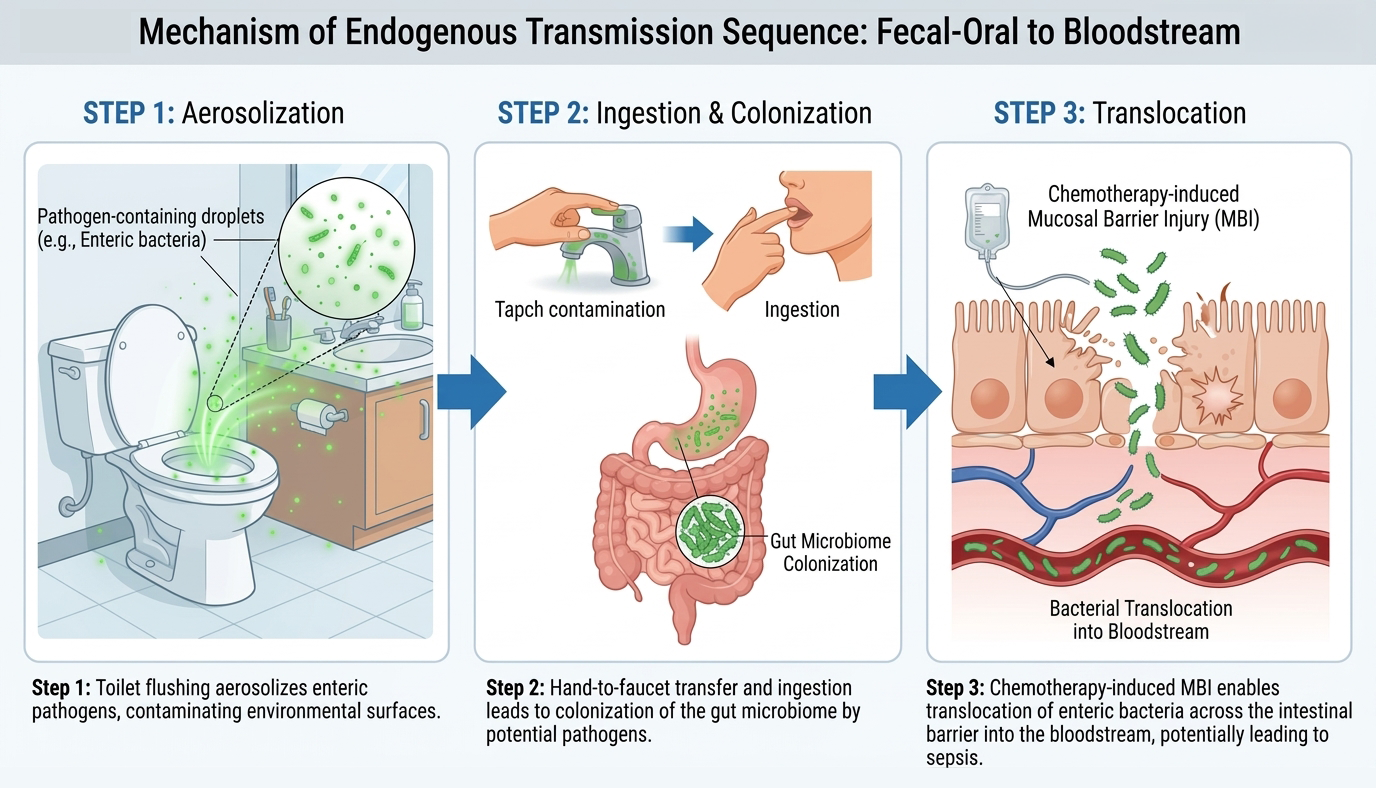
Dispersion: Environmental Plume Fallout
Flushing without true source containment aerosolizes gut pathogens, spores (such as C. difficile), and opportunistic gram-negative organisms. Droplet nuclei land across sink taps, countertops, toothbrushes, and door handles.
Domination: Surface Transfer & Gut Colonization
Environmental contamination transfers efficiently to fingertips and perioral mucosa. Pathogens achieve “intestinal domination” (>30% relative abundance in gut microflora), disrupting stable microbiome defenses.
Translocation: Mucosal Barrier Injury (MBI) & Sepsis
Chemotherapy induced cytotoxic damage compromises the single cell intestinal epithelial lining. Dominant colonizers breach the mucosal basement membrane, entering the bloodstream directly to precipitate MBI-LCBI & septic shock.
Validated Engineering Control
Splashblocker®: True Source Control at the Toilet Bowl
A medical-grade, cleanable barrier device engineered to eliminate the toilet plume bioaerosol pathway before particles enter room airflow.
99.98% Particle Aerosol Reduction
Proven across a 145-toilet, 15-hospital clinical multi-site study published in the Journal of Occupational and Environmental Hygiene (JOEH 2024, p = .0002).
Dual Protection: Pathogens & Chemo Excreta
Protects patients from autoinoculation while safeguarding nursing, EVS personnel, and household family members from aerosolized hazardous cytotoxic metabolites.
Ventilation-Independent Efficacy
Maintains rigorous source containment independent of room air changes per hour (ACH), bathroom exhaust performance, or negative-pressure status.
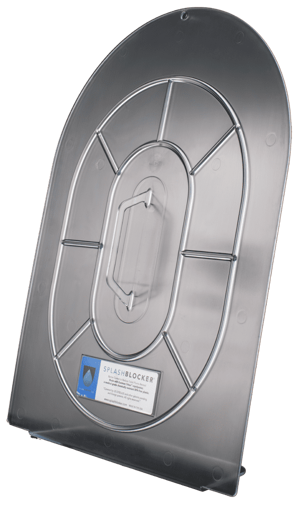
Hospital-Grade Cleanable Polymer
Fits Standard Elongated & Round Bowls
Clinical Indication & Medical Necessity
Bridging Inpatient Bundles to Prescribed Home DME
Extending institutional horizontal infection bundles into outpatient home recovery under ICD-10-CM D84.821 (Immunodeficiency due to drugs).
Horizontal Infection Bundle Source Control
Acts as an engineering safety barrier that captures aerosol particles at the toilet source, reducing the spread of hazardous chemotherapy excreta and helping protect EVS staff, nurses, and nearby immunocompromised patients from cross-exposure.
Keep Me & My Family Safe™ (ICD-10 D84.821)
Prescribed as durable medical equipment to treat drug-induced immunodeficiency. Serves the direct medical purpose of interrupting the 6x/day autoinoculation loop—preventing aerosolized gut flora from seeding home surfaces and translocating into the bloodstream.
DME Qualification Criteria Compliant
Meets all CMS DME criteria: medical-grade durable polymer construction, specific clinical
indication (interrupting neutropenic autoinoculation), appropriate for outpatient home use, and serves no non-medical function in the absence of drug-induced immunosuppression.
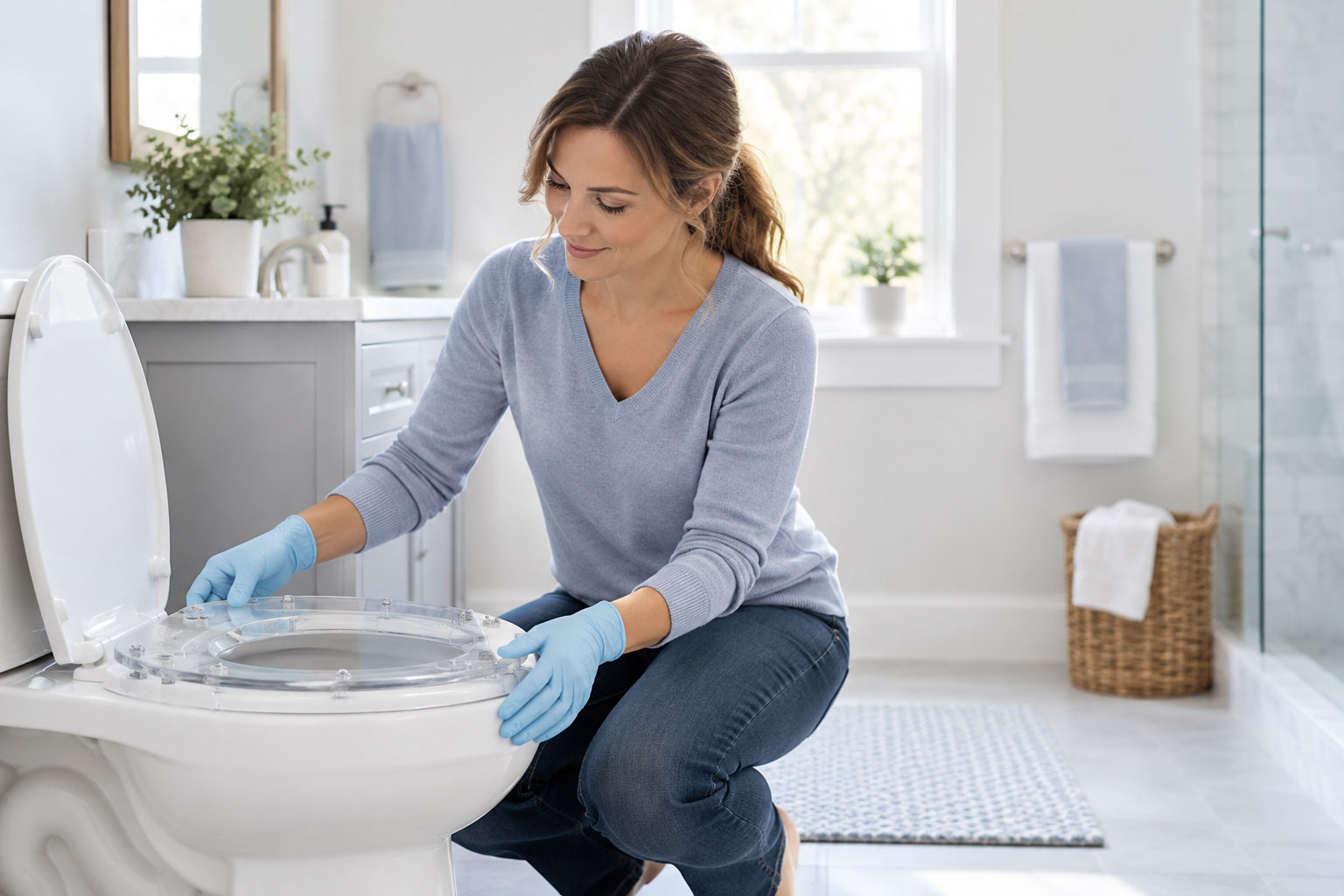
Immediate Implementation
Clinical Action Plan & EHR Order Sets
Standardize toilet plume source control across your oncology service lines, outpatient infusion suites, and discharge planning workflows.
Inpatient EHR Bundle
Integrate Splashblocker® placement into nursing admission checklists for all high-risk hematology, oncology, and transplant rooms.
Outpatient Discharge
Embed Keep Me & My Family Safe™ into discharge order sets for patients receiving myelosuppressive chemotherapy regimens (D84.821).